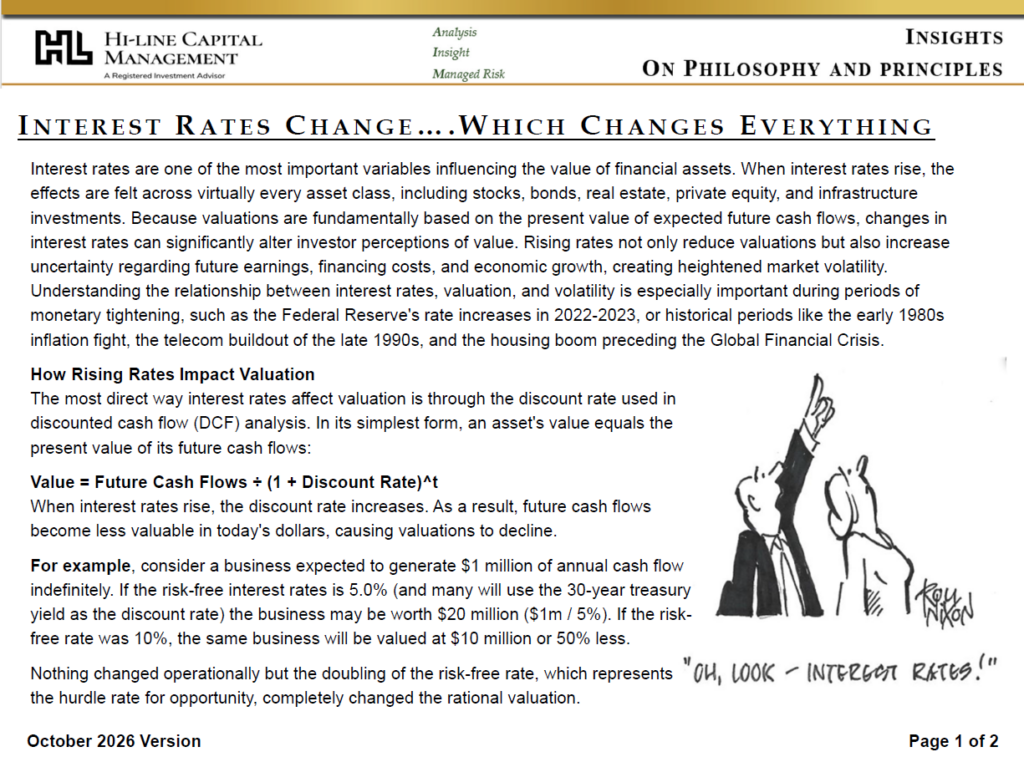
Every trading day, financial markets are “re-pricing” interest rates via changes in treasury yields or corporate bonds yields or the interest rate of a new debt issuance. But the majority of daily change is caused by short-term news and events from newly released economic data, inflation reports, central bank chatter and other news. The daily prices fluctuate far more than the change in long-term underlying economics.
Rising rates increases uncertainty in many things including economic growth. And this may impact changes in money supply, liquidity and confidence about future prospects. And changes in confidence may lead to larger reactions to economic news and events which translates into more volatile in prices.
Rising rates will impact asset classes differently. A long-dated fixed bond will likely fluctuate significantly but a business priced cheaply with stable earnings may fluctuate less. Duration is the key to any asset regarding price impact to rate changes. A short-term bond will reprice quickly whereas a money-losing growth stock with no cashflow has far higher embedded duration than a long-dated fixed bond. It all depends on the underlying asset and the ability to maintain and/or grow its cashflow.