

Hi-Line Capital Management was founded with a singular focus: helping hospitals strengthen the management of their financial assets.
The firm was created by Michael Anderson, MHA, after two decades of experience serving in healthcare leadership roles, including as a Chief Financial Officer. During his time as a hospital CFO, Michael recognized a gap in the healthcare finance landscape. While hospitals devote extensive resources to managing their operating business, very few rural hospitals dedicate similar expertise to managing their financial assets.
Over time, Michael devoted significant effort to studying investment strategy, asset allocation, and institutional portfolio management. That pursuit ultimately led to the creation of Hi-Line Capital Management, an investment firm designed specifically to support hospitals and healthcare systems in building disciplined investment programs.
Today, Hi-Line Capital works alongside hospital leadership teams to help develop structured investment processes, improve financial oversight, and guide long-term financial decision-making.
With more than 20 years of experience in healthcare finance, Michael Anderson and the Hi-Line team bring a perspective rarely found in traditional investment firms: a deep understanding of both hospital operations and institutional investing.
As a result, Hi-Line Capital has become one of the few firms dedicated specifically to helping hospitals build structured investment strategies and internal investment processes designed for healthcare institutions.
Hi-Line Capital Management works with a wide range of healthcare organizations, including:
Our team has extensive experience working with hospital boards, finance committees, and executive leadership teams.
Healthcare organizations face unique governance structures, regulatory frameworks, and community expectations. Many hospitals must navigate board turnover, public oversight, and political considerations while making long-term financial decisions.
Because members of our team have worked directly inside healthcare organizations, we understand these dynamics.
We recognize the importance of:

Maintaining strong local banking relationships

Supporting the hospital’s role within its community

Navigating board governance and fiduciary oversight

Navigating board governance and fiduciary oversight

Guiding the development of thoughtful investment policies
Our role is not to replace existing relationships. Instead, we work alongside hospital leadership to strengthen hospital financial management through disciplined investment strategy and governance frameworks.
The first business is obvious and familiar. It is the delivery of healthcare services as defined by its mission.
The second business is far less visible, yet significant in pursuing financial strength, which is required to remain an independent rural hospital.
The second business is the management of the hospital’s financial assets—its cash reserves, investment balances, funded depreciation and other financial assets on the balance sheet.
For many hospitals, these financial assets represent years—or even decades—of retained earnings and reserves. Yet unlike the operating business, the financial business is rarely managed with the same level of structure, leadership, or strategic oversight.
In many cases:
This creates a significant gap in hospital financial management between the rural hospitals getting financially stronger versus weaker.
When properly structured, a hospital’s financial assets are the most powerful contributor to long-term financial stability. Over time, disciplined investment management can strengthen balance sheets, improve days cash on hand, and provide greater flexibility to invest in facilities, services, and community health initiatives.
Understanding and managing this second business is becoming increasingly important for hospitals seeking to maintain independence, preserve local control, and sustain their mission for future generations.
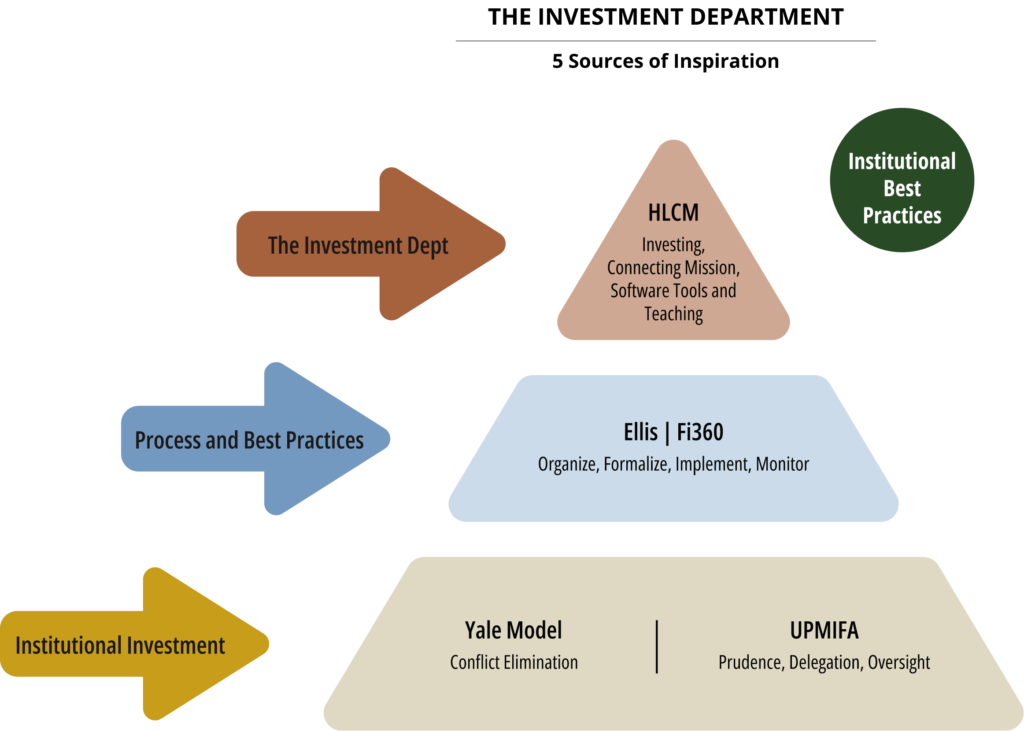
Hi-Line Capital Management’s foundation is built around institutional best practices for managing healthcare financial assets.
These practices include:

Clear Investment Governance
Hospitals benefit from having defined policies that guide investment decisions, establish accountability, and support board oversight.

Structured Financial and Liquidity Planning
Financial assets should be segmented appropriately between operational liquidity, reserve capital, and long-term investment capital.

Institutional Asset Allocation and Investing
A disciplined investment framework allows hospitals to pursue long-term compounding while maintaining the liquidity needed to support operations and capital spending.

Transparency and Reporting
A disciplined investment framework allows hospitals to pursue long-term compounding while maintaining the liquidity needed to support operations and capital spending.

Long-Term Perspective
Hospitals are perpetual institutions. Investment strategies must be structured to support multi-decade financial sustainability rather than short-term results.
When these elements are implemented effectively, the hospital’s financial assets can complement the operating business and strengthen the organization’s overall financial resilience.
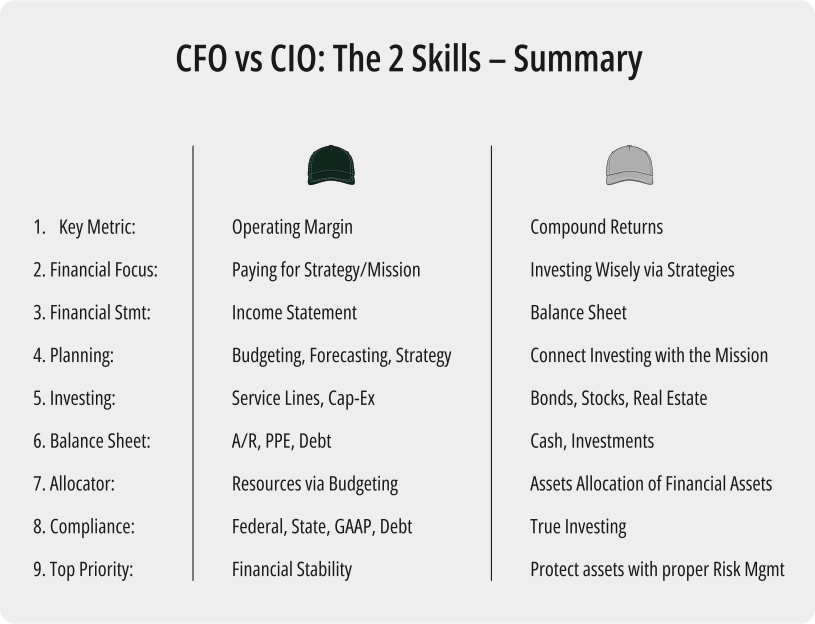
One of the most common misconceptions in hospital financial management is the assumption that the responsibilities of the Chief Financial Officer (CFO) naturally extend into institutional investment management.
In reality, these roles require two very different areas of expertise.
The Chief Financial Officer focuses on the financial stability and operational performance of the organization. Their responsibilities include budgeting, revenue cycle oversight, financial reporting, compliance, and capital planning.
The Chief Investment Officer (CIO) focuses on managing institutional investment portfolios. This role requires specialized expertise in areas such as asset allocation, portfolio construction, risk management, and market analysis.
Both roles are essential.
A CFO ensures that the hospital operates efficiently and maintains financial stability. A CIO focuses on building and managing long-term investment portfolios that allow financial assets to grow responsibly over time.
For many hospitals, particularly rural hospitals, creating a full internal investment department may not be practical. In those cases, partnering with an external firm that understands healthcare finance can provide access to institutional investment expertise without requiring internal staffing expansion.
Effective rural healthcare leadership teams will challenge themselves by asking important questions about “how do improve”. As it relates to the management of their financial assets following assessment will provide insight into potential weakness or areas of improvement opportunities; .
If these questions have not been thoroughly understood and addressed, there are likely significant opportunities to strengthen your hospital’s approach to hospital financial management, investment process and lowering fiduciary risk.
Hi-Line Capital helps hospital leadership teams explore these questions and develop a thoughtful strategy for managing financial assets.
To remain a rural independent hospital or healthcare system, it is imperative to obtain and pursue greater financial strength. In order to improve financial strength, you must have a strategy or strategic plan to improve the most important financial metric – “days cash on hand”. In order to improve days cash on hand – you must generate investment returns that exceed the inflationary rate of your expenses.
Many healthcare leaders recognize that long-term financial sustainability requires a broader view of hospital finance.
Leaders increasingly understand that balance sheet strength and disciplined financial asset management can play a critical role in maintaining independence, supporting capital investment, and protecting the hospital’s mission.
Hospitals that approach financial assets with the same strategic discipline applied to operations often find themselves in a stronger position to navigate industry challenges and invest in the future of their communities.
Every hospital’s financial situation is unique but most investment advisors provide a generic asset allocation without consideration for the hospital’s specific needs.
A Strategic Investment Review provides hospital leadership teams with an opportunity to examine how their financial assets are structured and whether improvements in strategy, governance, or investment discipline could strengthen long-term financial stability.
If you are evaluating ways to improve your hospital’s approach to hospital financial management, we invite you to request a Strategic Investment Review with the Hi-Line Capital team.
A conversation to assess how Treasury Management™ may fit within your broader portfolio structure.