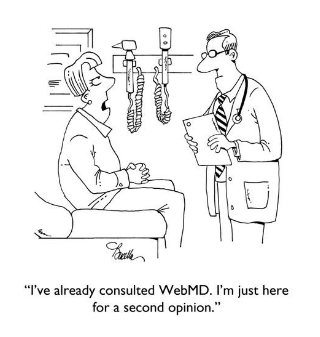

Evidence-Based Medicine became a formal movement in the continuous pursuit of improvement in the quality and consistency of clinical care. In the “olden days”, there was wide variation in practice patterns, tools, solutions and outcomes. At one point in time, it was “conventional” to use mercury for treating syphilis or gout, it was acceptable to use heroin as a non-addictive cough suppressant, or cocaine for pain relief. And several dangerous procedures included bloodletting for fluid balancing, waterboarding for insanity, tobacco smoke enemas for cholera, or the “whale cure” for rheumatism. The continuous improvement of best practices or evidence-based medicine eventually delivered significant improvements to the understanding of germs and infections, vaccination to eradicate deadly diseases, surgical process improvement to reduce the probability of bad outcomes, and diagnostic tools to better identify problems. As a result, evidence-based medicine has delivered far superior treatment, effectiveness, and safety for society.
Evidence-Based Investing has similarities to evidence-based medicine. To avoid bad outcomes, one must continuously seek truth and reality. What is the economic and investment “north star?” At HLCM, the north star is value-based investing which has many similarities to Evidence-Based Medicine.
Examples of Evidence-Based Investing come from the giants of the past, which include Ben Graham, Warrant Buffett, Charlie Munger, Peter Lynch, Charles Ellis, Seth Klarman, Sidney Homer and Martin Leibowitz, to name a few.
Evidence-based investing pursues the improvement in decision-making by relying on systematically collected
evidence rather than intuition, tradition, or anecdote. In medicine, this evidence typically comes from randomized controlled trials, systematic reviews, and clinical guidelines aimed at improving patient outcomes; while investing comes from long-term market data, financial research, and empirical studies designed to improve risk-adjusted returns. Both approaches emphasize discipline, transparency, and an awareness of bias, and both require professional judgment to apply population-level evidence to individual circumstances.
All forms of evidence require long-term thinking; prioritizing outcomes, consideration of safety standards to seek
maximum effectiveness over time. In short, the mantra is “What works long-term and why”?
Short-term results often deviate from evidence-based investing results given market fluctuations as caused by the votes or popularity of the crowd. But the pursuit of executing long-term sound principles will bring rewards to the savvy, disciplined and rational participants of the investment market.
With the increased use of social media, the increased prevalence of legalized gambling or “prediction markets”, and the increased acceptance in believing that bitcoin or other forms of non-productive assets are in fact “investing”, the fundamental truth remains: cashflow generated by an asset provides evidence of value. And
predicting price change for assets with unpredictable cashflow or assets without cashflow will always remain speculative, just like use of leeches in the 1830’s.
Occasionally certain markets become irrationally high or low suggesting the reversing of course regarding evidence-based investing. But this often presents opportunity or risk reduction for those like us guided by the “north star” of evidence-based investing.