“The essence of investment management is the management of risks, not the management of returns.”
–Ben Graham
Since 1982, the investing world has only experienced declining interest rates – due primarily to low and contained
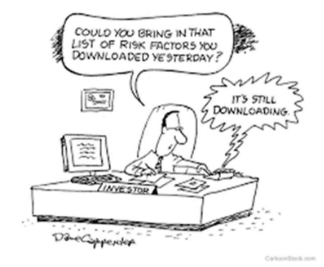
levels of inflation. Since the Great Financial Recession of 2007-09, the world has largely only experienced quantitative easing and abundant liquidity – due primarily to the Federal Reserve’s intervention. As recent as August of 2020, the Federal Reserve was concerned about deflation. Now, rising rates, inflation and all related “consequence of consequences” have further raised concerns and increased confusion about the future. In short, has a “sea change” occurred, which is the radical change of direction of risk factors?
The investing year of 2022 shocked most investors with inflationary forces as the primary root cause.
Now, further economic headwinds have materialized including
- Liquidity deterioration……and reduced banking confidence
- Credit contracting…..from banks and Federal Reserve
- Commercial real estate problems…..increased vacancy, refinance issues, lower prices
Causes and correlations of the past are not always clear and knowable…which certainly makes the future far less
certain. Good investors will analyze the current environment, and more importantly future opportunities, through
a different lens. Better investors will focus on controlling the controllable, with special emphasis on managing
liquidity risk.
Managing Liquidity Risk……Control the Controllable.
Only a small percentage of an investor’s time should be allocated towards uncontrollable factors such as: the economy, interest rate direction, politics, natural disasters, war, currency movement, etc. Understanding the current market environment and “temperature” is important, along with future macro-economic outcomes, but largely both factors are truly unknowable with consistency and precision.
The majority of an investor’s time must be dedicated towards controllable factors such as: long-term orientation, discipline, consistency, temperament, due diligence, conservatism in analysis, investment selection, prudent diversification, financial planning, managing risks, reacting rationally to current events, stress testing cashflow against adverse future events, and certainly price paid for investment assets.
And presently, the increase in focus on liquidity, whether planned or contingent, should be done. Liquidity risk is the possibility that one cannot meet its short-term obligations….on time. Therefore, liquidity refers to the ease at which an asset can be converted into cash without negatively affecting its price. The management of liquidity risks involves many forms including; financial planning, asset and liability matching, converting securities into cash, and raising capital. The best advice is to avoid being reliant upon the kindness of strangers for liquidity.
The Good News…….Take What the Markets Provides
Assessing and analyzing market opportunities based on the filters established with proper investing philosophy and principles allows investors to take what the market provides.
Regarding the ability to improve overall liquidity profile, short-term treasury securities are offering advantaged returns and benefits including:
1. The most liquid security providing optionality against market contagion
2. Short duration to guard against inflation and interest rate risk….given inverted curve
3. No credit risk
4. Compensation greater than a 5-year investment grade corporate bond
5. Volatility minimization
6. Current returns that are within 75% of long-term equity index returns
The academics teaching modern portfolio theory likely suggest the above is not possible given the needed to justify the theory including; asset returns distributed randomly, correlations between asset classes fixed forever and investors being rational.
The management of liquidity risk is often not emphasized. In March 2008, Bear Stearns experienced a liquidity event (its leveraged hedge fund with unrealized losses eroded capital and its ability to refinance) was an example of an early event leading up to the great financial recession. No prediction is being made but the recent bank run should serve as a reminder to the investing world about the importance of management liquidity risk.